BH10 Builder Hall Base with Tight Core Compartments

Latest Reviews 0
Strategy Explanation
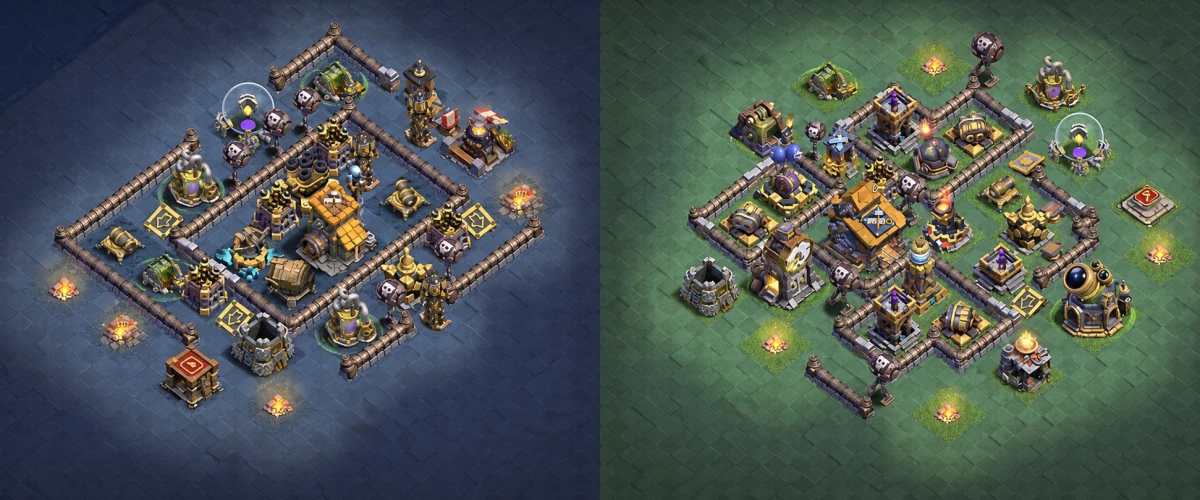
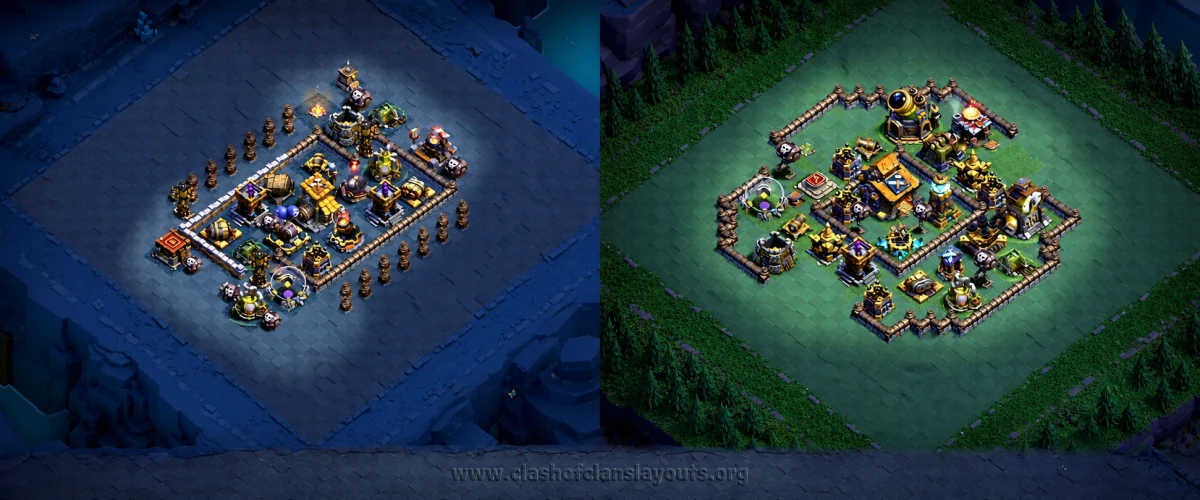
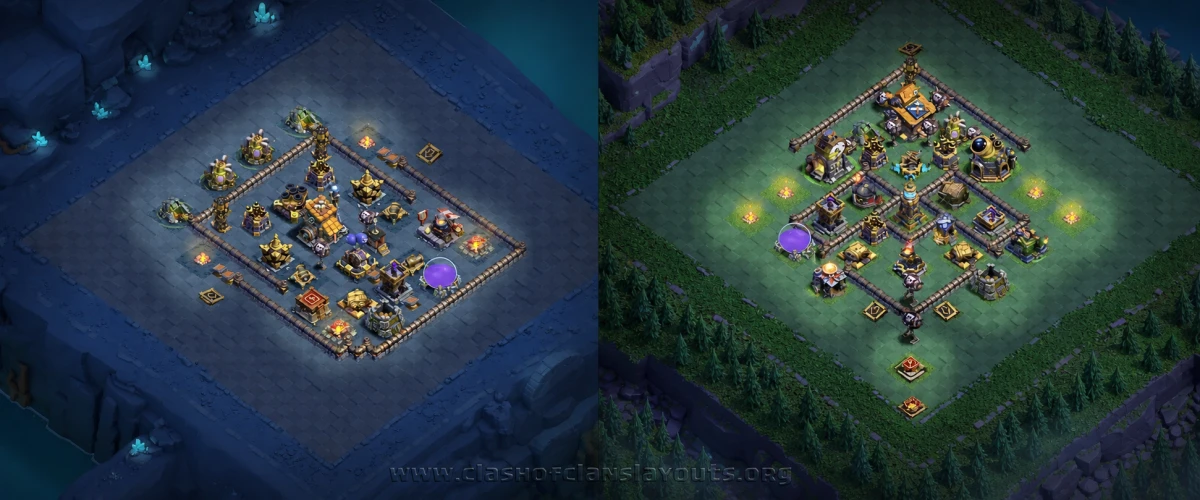
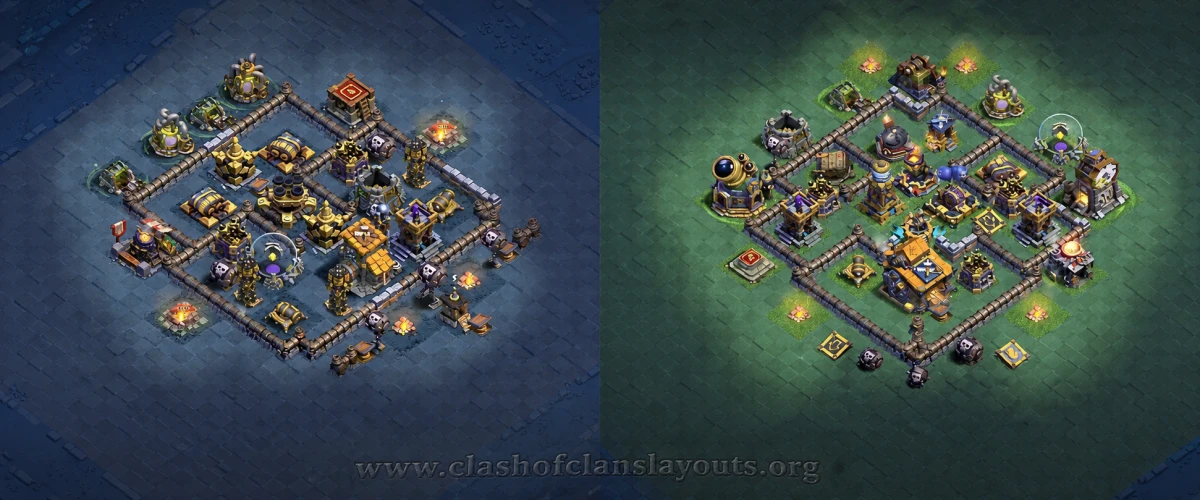
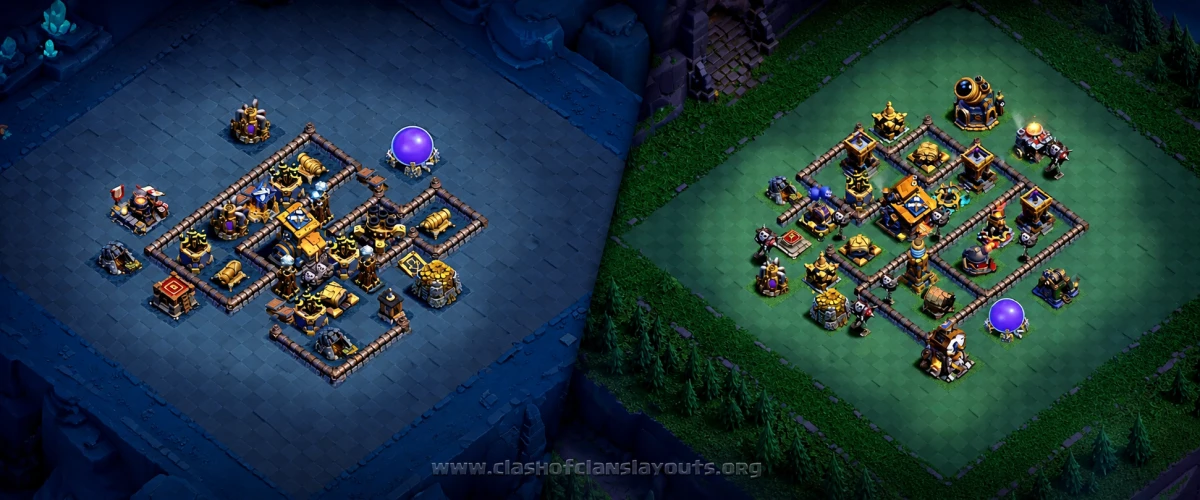
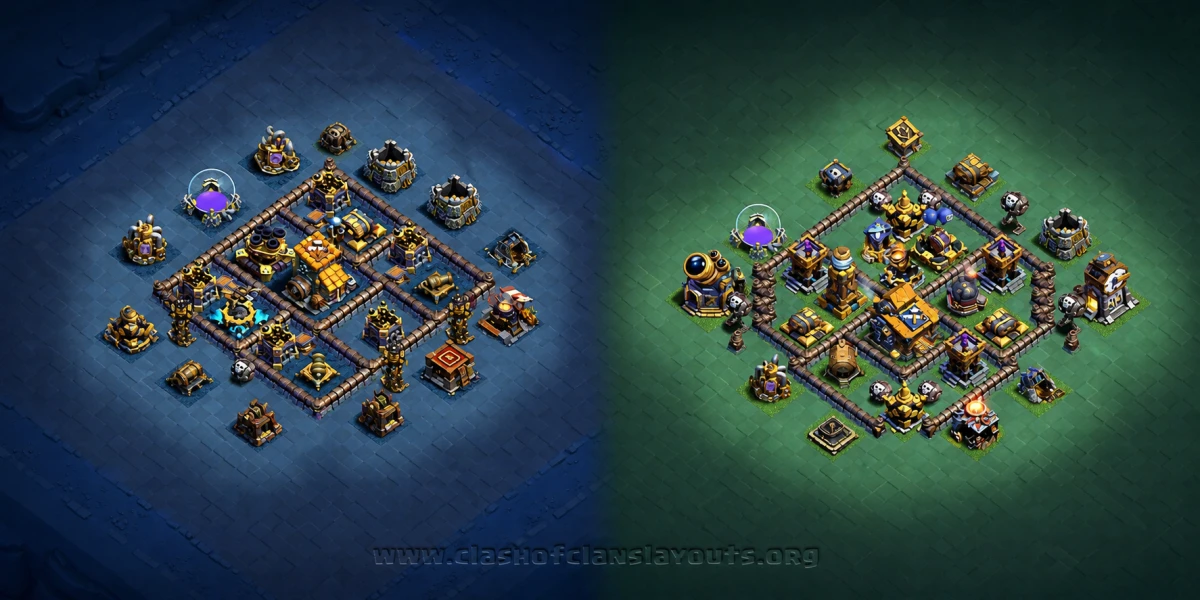
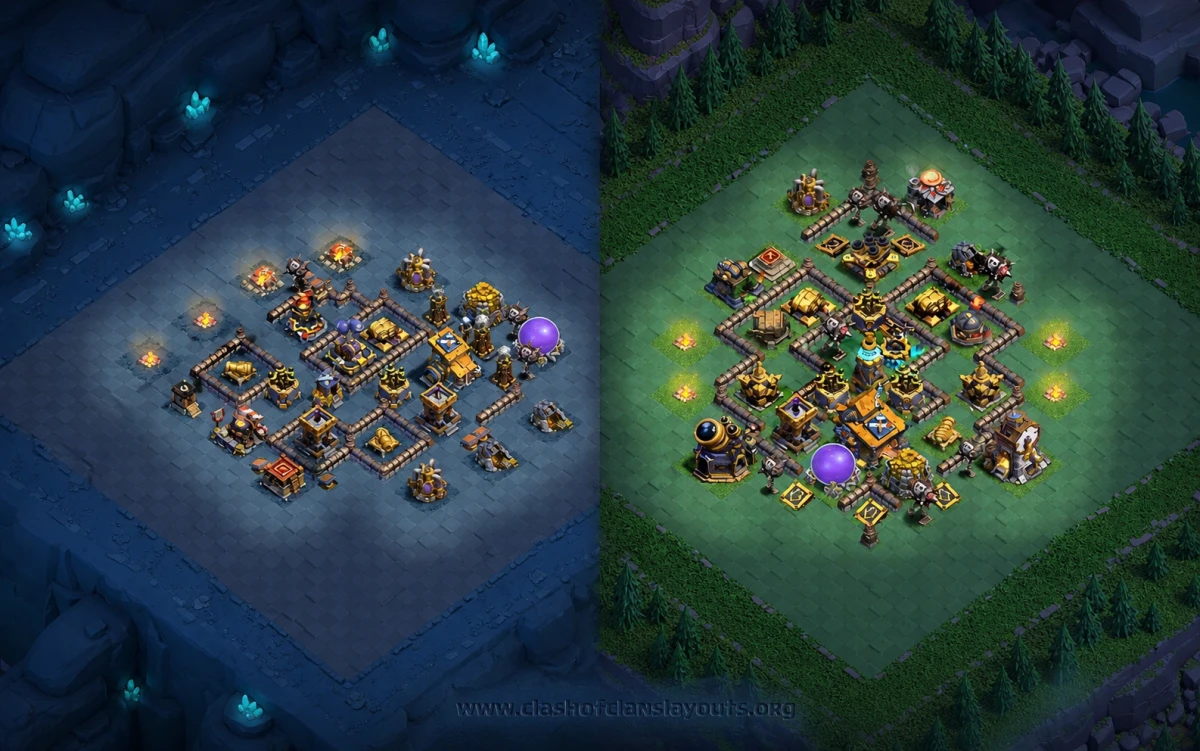
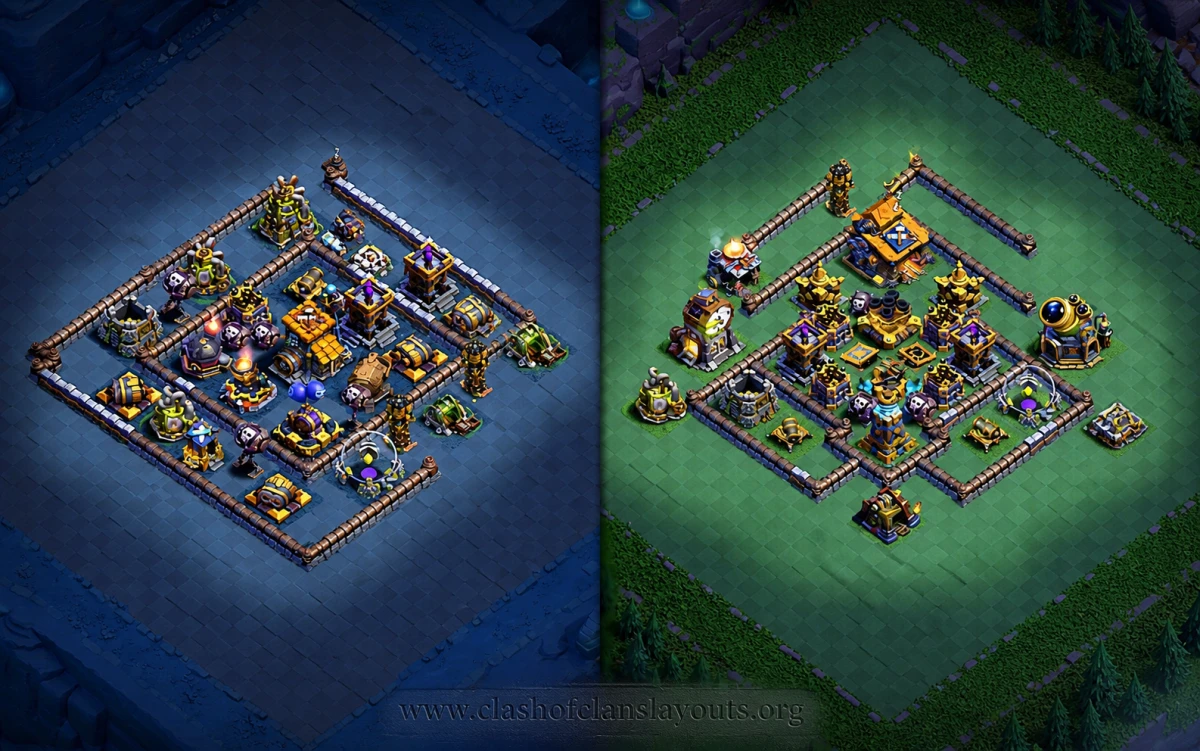
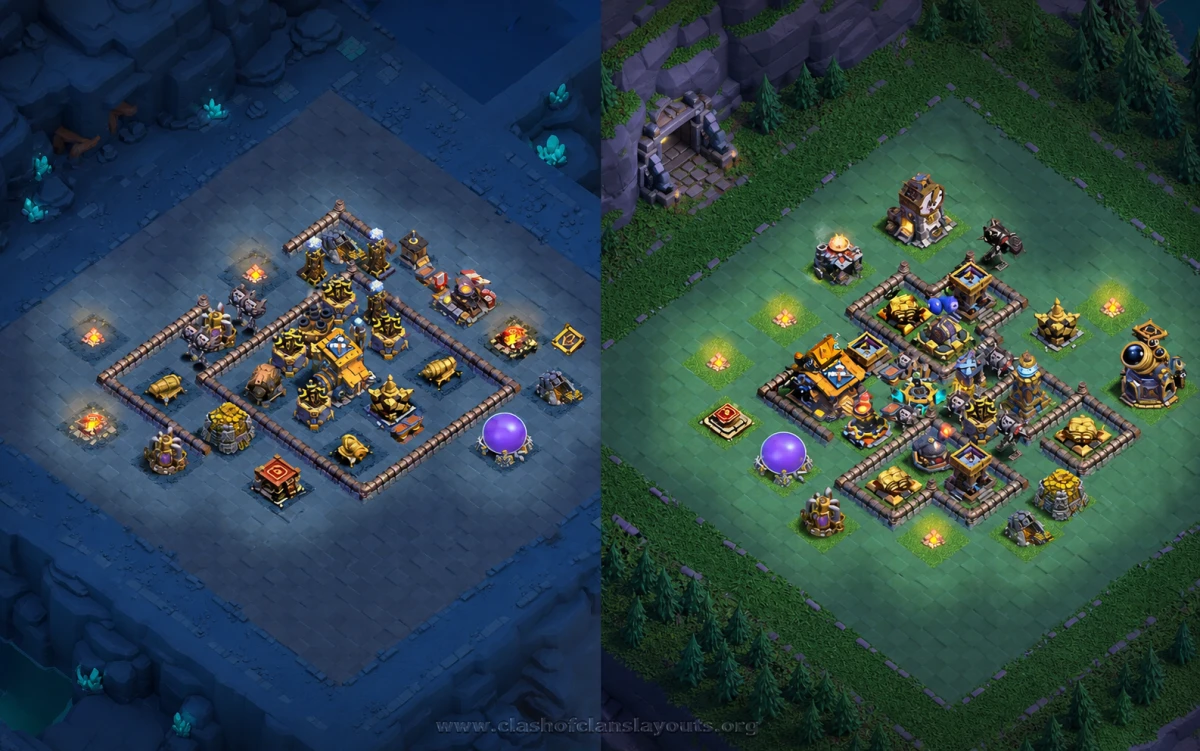
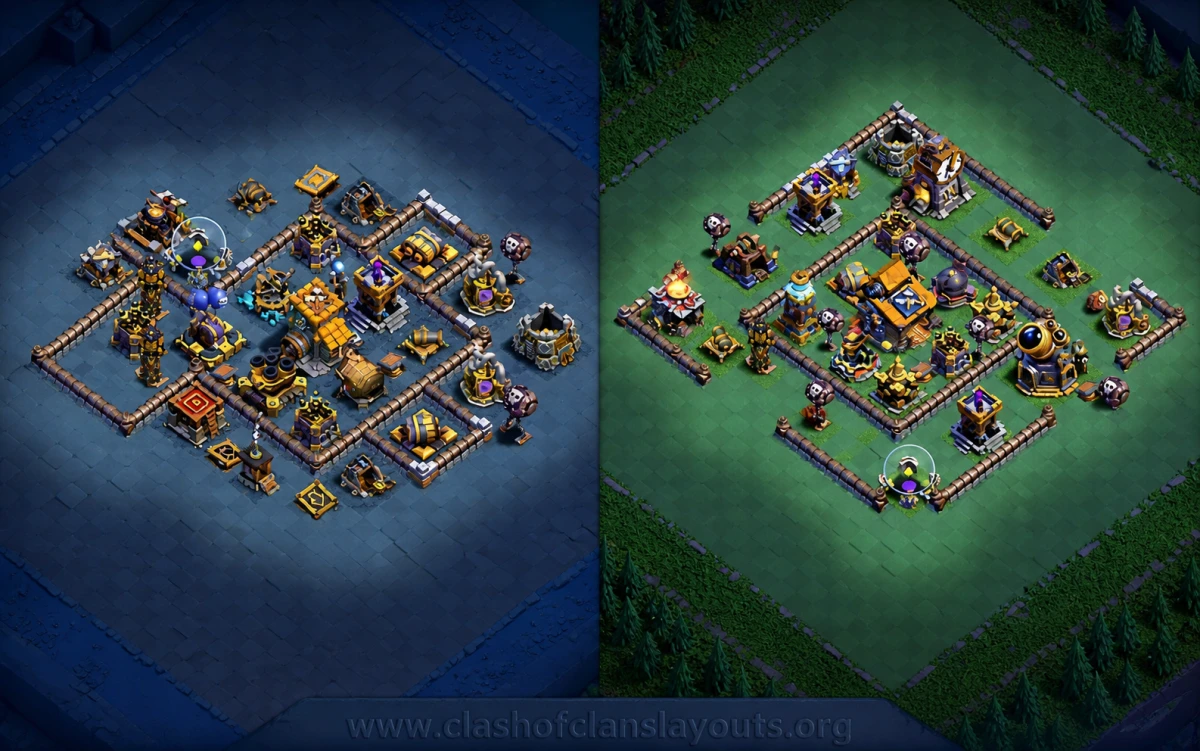
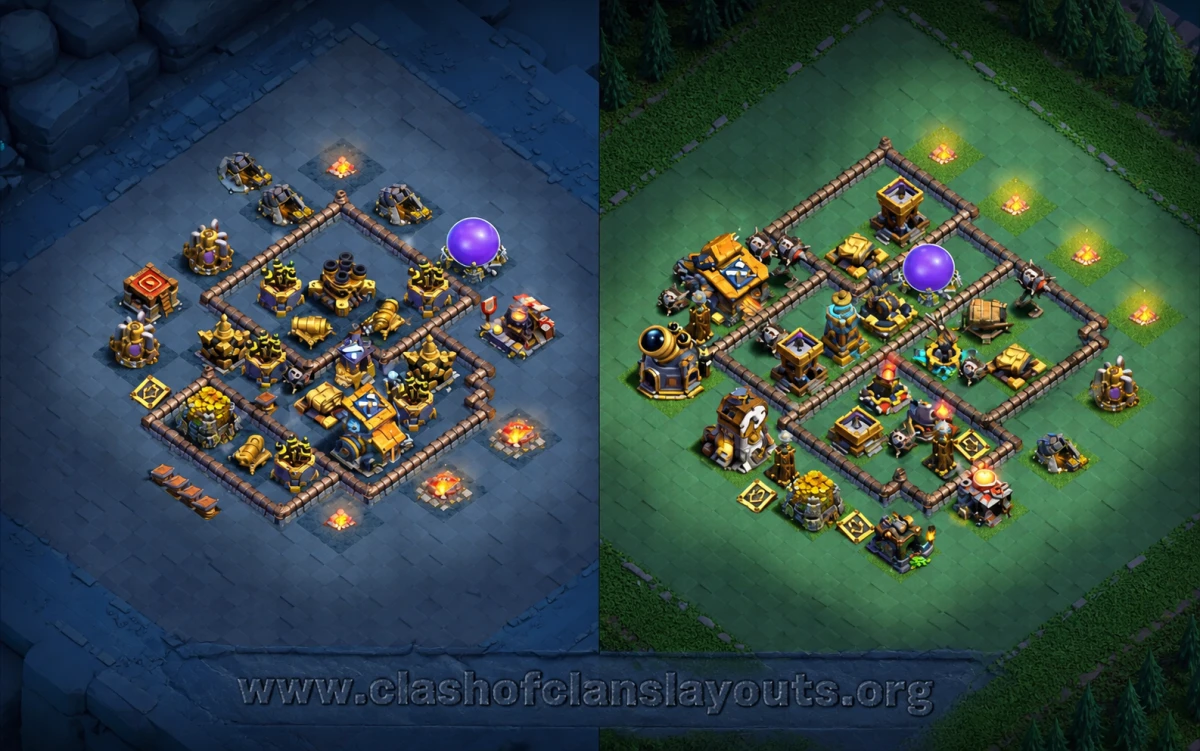
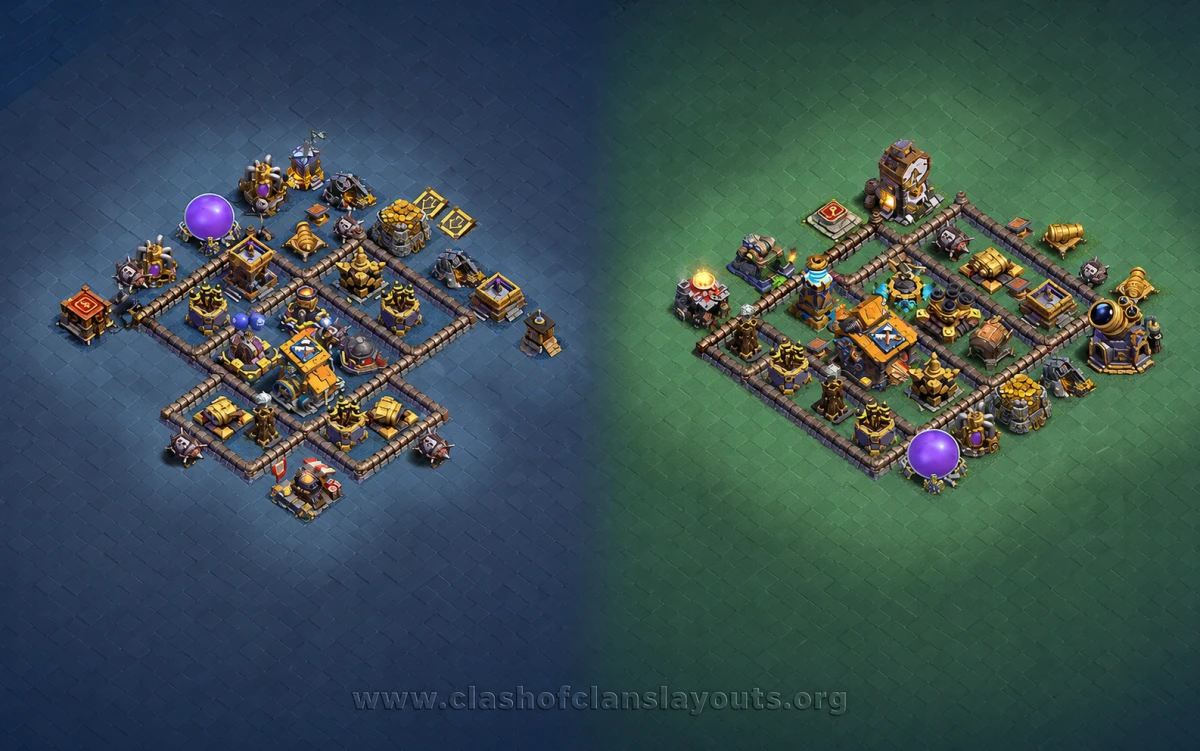
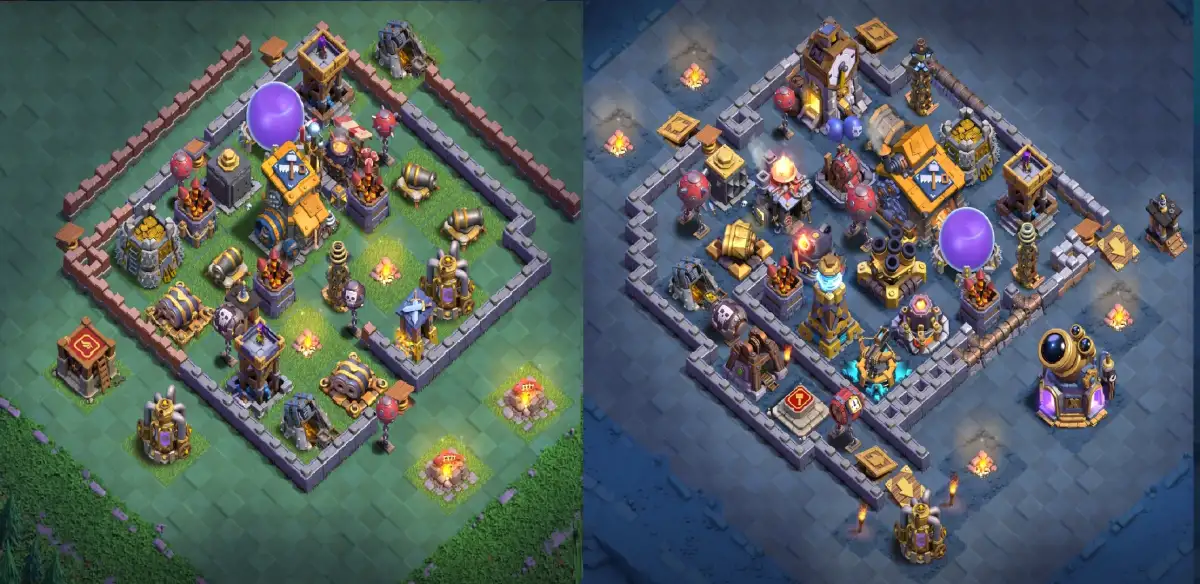
This BH10 uses a very compact two-stage setup. In the first stage, the Builder Hall sits high in the upper section with several heavy defenses packed close around it. The walls create a small ring of compartments rather than a wide open box, so ground troops do not get a clean straight push through the middle. That matters in Builder Base because short pathing mistakes often cost attackers percentage, and this design tries to force exactly that.
The first stage also keeps multiple defenses active at once around the Builder Hall area. The central placement of point defenses and the tight spacing mean a direct drop can run into overlapping fire quickly. At the same time, some outside structures are limited, so there are fewer easy buildings to trim without stepping into range. This makes the opening attack feel cramped instead of comfortable.
The second stage continues the same idea. The O.T.T.O Outpost is placed inside a dense compartment cluster rather than being left on an edge, and major defenses are spread around it so one clean entry does not immediately unlock the whole section. The lava launcher is set low and off to the right side, giving it room to pressure long ground pathing across the base. Air-targeting defenses and splash coverage are also mixed into the core, so the second stage is not inviting for simple mass air either.
Strengths
The strongest part of this layout is how little free movement it gives an attacker. Both stages are compact, with important defenses protected by short wall layers and nearby support. That usually creates awkward troop drift and makes it harder to keep damage focused where you want it.
- Protected Builder Hall: It is not sitting on an exposed edge, so early value takes more commitment.
- Tight first-stage coverage: Several defenses can engage the same entry, which punishes careless spam.
- Second-stage core pressure: The O.T.T.O Outpost is surrounded by defenses instead of isolated.
- Lava launcher angle: Its side position can be annoying for long ground pushes that stay grouped.
- Split defensive value: The most important targets are not all lined up in one obvious lane.
First Stage Pathing
The opening section looks built to deny easy percentage and force troops inward under fire. Because the Builder Hall sits toward the upper side, a careless top entry can get stalled by defensive concentration before enough damage is done. Side entries may feel safer, but they can also pull troops around compartments instead of straight into the objective.
That makes funnel setup important against this design. An attacker who fails to trim correctly may watch troops split around the core and leave the Builder Hall standing longer than expected. If you want to test that interaction yourself, the copy option is useful because small deployment differences matter a lot on compact Builder Base designs.
Second Stage Pressure Points
The second stage is centered around protecting the O.T.T.O Outpost while making the lava launcher relevant for as long as possible. The launcher being offset instead of centered is a practical choice: it can hit advancing ground troops from an angle while other defenses continue to fire from the middle compartments.
This setup also means attackers have to choose between pushing toward the launcher early or driving deeper toward the central cluster first. Neither route looks completely free. Going too directly into the middle leaves side pressure active, while spending too long on the flank can cost time and momentum.
Air and Ground Trade-Offs
Against air, the compact sections reduce the amount of safe surgical picking on the edges, but the relatively close spacing may still allow strong momentum if the entry gets rolling. Against ground, the walls and short compartments are the bigger story. They do not create a giant maze, but they do create enough redirection to break clean straight-line movement.
Overall, this BH10 is a practical all-around design that leans on compact structure, layered coverage, and inconvenient pathing rather than gimmicks. It is especially solid for making both stages feel crowded and uncomfortable from the first troop drop.