




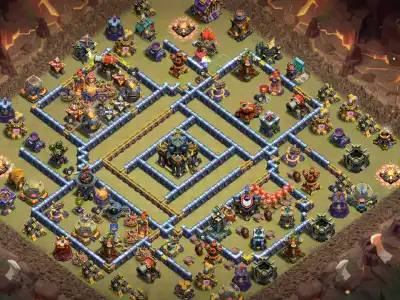

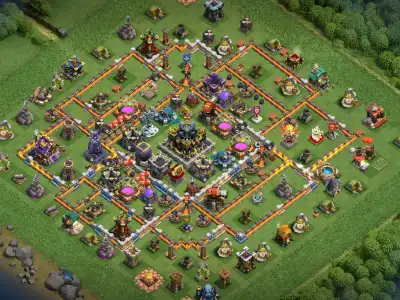



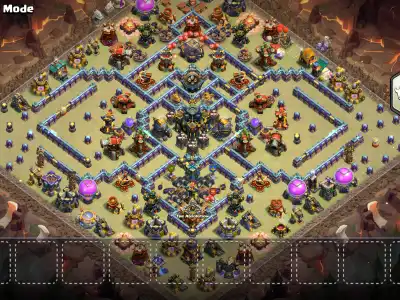
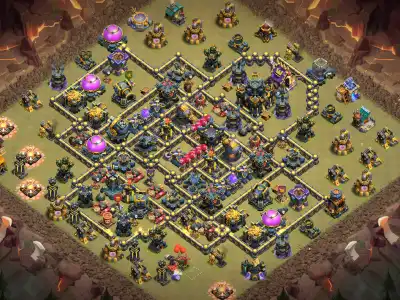
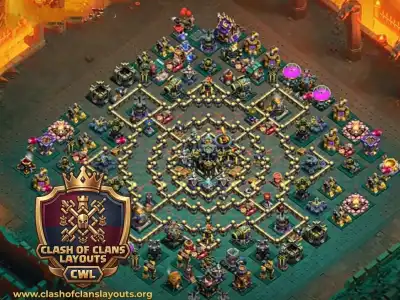
COC Bases: Best TH17 Anti Air & Anti Electro Dragon Layouts (Copy Links)
Shut down air spam with TH17 anti-air bases built to break Electro Dragon chains, control air pathing, and destroy blimps early. Copy any base instantly with 1-tap links.
How to Choose the Best TH17 Anti-Air and Anti-Electro Dragon Base
A TH17 anti-air base is designed to reduce the value gained
by Electro Dragons, Balloons, Dragons, flying Heroes, Battle Blimps and other
air-focused attacks. The layout should interrupt chain damage, protect important
air-targeting defenses and preserve enough damage for troops that survive the
opening.
The best TH17 anti-Electro Dragon layout for your village is
not automatically the design with the widest spacing or the most centralized
Air Defenses. It should combine controlled spacing, useful Air Sweeper directions,
Firespitter coverage, Town Hall pressure and realistic anti-Blimp routes.
Use the layouts on this page as starting designs. Compare building spacing,
Town Hall access, Firespitter aim, Air Sweeper directions, trap distribution
and back-end air damage before selecting a base. No TH17 layout can guarantee
a defense against every air army or attacker.
Reduce Electro Dragon Chain Value
Electro Dragons gain additional value when several buildings are close enough for lightning to continue between targets. Separate high-value defenses so one attack does not connect multiple important buildings.
Focus on the relationship between Air Defenses, Sweepers, Inferno Towers, Spell Towers, the Monolith, Firespitters and the Town Hall rather than spreading every building equally.
Coordinate Sweepers and Firespitters
Air Sweepers can slow or redirect air troops, while Firespitters apply pressure inside their selected directional areas. Their coverage should influence the air entries attackers have a reason to choose.
Review all directions after copying a layout. Strong buildings aimed toward an unused side provide limited defensive value.
Distribute Air-Targeting Damage
Avoid placing every Air Defense, Inferno Tower and other important air-targeting defense inside one Hero, spell or Battle Blimp route.
The opening, central and back-end sections should each contain enough pressure to challenge surviving Dragons, Balloons and flying Heroes.
Create Layered Anti-Blimp Routes
A Battle Blimp may approach the Town Hall from straight or diagonal angles. Sweepers, Seeking Air Mines, Air Bombs, the Tornado Trap and defensive coverage should influence more than one possible route.
Do not depend on a single trap to stop every delivery. Attackers may test the route, change the entry or protect the Blimp with spells and Hero abilities.
What Makes TH17 Anti-Air Base Building Different?
Town Hall 17 has a different defensive structure from earlier Town Hall levels. The Eagle Artillery is merged into the Town Hall to create the Inferno Artillery, while the destructive Town Hall explosion used at some earlier levels is replaced by a separate visible Giga Bomb.
TH17 also introduces the Firespitter, a directional defense whose coverage must be aimed toward a selected part of the village. These mechanics make Town Hall position, expected air routes and directional settings especially important.
Inferno Artillery Coverage
The Inferno Artillery fires at multiple targets and leaves damaging areas that affect both ground and flying troops. Its position can pressure a grouped air army before and during the Town Hall approach.
Avoid designing the entire anti-air plan around the Town Hall. Once it is destroyed, enough air-targeting damage should remain elsewhere to defend the rest of the village.
Separate Giga Bomb Placement
The Giga Bomb is a visible trap with a large damage area and pushback. Its position can affect air-army movement, Hero entries and Battle Blimp follow-up paths.
Do not assume attackers will enter directly through it. Review whether the surrounding objectives make that route attractive enough to justify its position.
Directional Firespitter Coverage
Firespitters only target troops inside their selected directional area. Aim them toward likely Electro Dragon, Balloon or Dragon approaches rather than relying on their building position alone.
Their coverage should complement Air Sweepers and other defenses without leaving the opposite side completely open.
Defending Hero Assignments
TH17 players can choose which Heroes defend through Hero Banners. Review the defensive Hero positions after copying a layout and make sure their coverage supports likely air entries.
Avoid grouping every defending Hero in one section where a single spell-supported attack can control them together.
How to Reduce Electro Dragon Chain Damage
Anti-Electro Dragon spacing should break important chains without creating a village full of isolated defenses. Excessive spacing may give attackers easy funnels, safe percentage and simple cleanup routes.
The objective is controlled separation between valuable targets, supported by overlapping defensive ranges.
Break Straight Defensive Lines
Avoid arranging the Town Hall, Air Defenses, Inferno Towers, Sweepers, Firespitters and Spell Towers along one direct flight path.
An Electro Dragon army entering from that direction may gain chain, spell and Battle Blimp value through the same route.
Use Offset Building Groups
Offset important targets so the air army must change direction between defensive sections. This can separate troops or leave part of the army outside the intended Rage or Freeze Spell area.
Separate Spell Value
Avoid placing several major air defenses inside one Freeze or other spell area. Attackers should need to choose which defensive section to control.
Protect Useful Funnel Buildings
Selected perimeter buildings should remain under defensive coverage. Completely safe outside structures can help attackers create an accurate Electro Dragon funnel with a small troop commitment.
Planning Air Sweeper Directions at TH17
Air Sweeper direction should be planned together with Town Hall access, Firespitter cones and outside-building funnels. An attacker may avoid a Sweeper when another side offers equal or greater value.
- Cover attractive entries: aim Sweepers toward sides that offer Town Hall, Air Defense, Spell Tower or core access.
- Support Firespitter coverage: use pushback to keep flying troops inside useful directional defensive areas.
- Influence Battle Blimps: point Sweepers across likely straight or diagonal delivery routes.
- Avoid easy removal: one Hero entry should not remove a Sweeper, Air Defense and another major defense together.
- Review after copying: verify both Sweeper directions before activating the layout.
How to Aim TH17 Firespitters
Firespitter direction is one of the most important settings to review in a copied TH17 anti-air layout. Its position may look correct while its active cone points away from the expected attack route.
Cover the Town Hall Approach
One Firespitter may support an attractive Town Hall or Battle Blimp entry, particularly when attackers are likely to group air troops in that section.
Avoid placing it where the same opening removes the Firespitter and every defense it is intended to support.
Preserve Back-End Coverage
Another directional defensive area can protect the section air troops are likely to reach after the Town Hall or first Air Defense falls.
Back-end coverage is important against surviving Balloons, Dragons and flying Heroes.
Avoid Duplicate Unused Coverage
Pointing both Firespitters and both Sweepers toward one low-value side may leave another attractive entry with limited resistance.
Use Replay Evidence
Compare the intended coverage with actual attack entries. Change the aim when several replays show attackers consistently avoiding the selected cones.
Protecting the Inferno Artillery
The TH17 Town Hall weapon is always active, allowing it to pressure attackers without waiting for a troop to enter a small activation radius. Its damaging areas can affect several flying troops when they remain grouped near the Town Hall.
However, Town Hall protection should not create one overloaded core. A successful Battle Blimp, Hero entry or concentrated spell combination should not remove the Town Hall, Monolith, Spell Towers and every important air defense together.
- Separate major objectives: divide the Town Hall, Monolith, Spell Towers and important air defenses where possible.
- Control the approach: use Sweepers, Firespitters and traps to influence likely Town Hall routes.
- Preserve defenses after destruction: remember that TH17 does not rely on a Town Hall destruction bomb to damage the surviving army.
- Protect the follow-up route: troops that secure the Town Hall should still face meaningful air damage elsewhere.
TH17 Anti-Blimp Planning
Battle Blimps may be used to reach the Town Hall, Spell Towers, Monolith or another concentrated defensive section. Evaluate every layout from all deployment sides rather than checking only the shortest horizontal route.
Seeking Air Mine Placement
Place Seeking Air Mines along likely Blimp, Dragon and high-hitpoint flying-unit routes. Avoid stacking all mines on one approach that can be tested or bypassed.
Air Bomb Placement
Air Bombs can pressure grouped Balloons and other clustered flying troops. Position them where troops are likely to gather after changing targets.
Tornado Trap Placement
Use the Tornado Trap where its delay keeps a Battle Blimp or air army inside active Town Hall, Firespitter, Inferno Tower or other defensive coverage.
Separate Landing-Zone Value
Avoid placing the Town Hall, Monolith, Spell Towers and multiple major air defenses inside one compact delivery area.
One successful Blimp should not remove the complete anti-air structure.
Planning against Dragon Duke Entries
Dragon Duke is available to TH17 attackers and becomes more dangerous when operating without nearby flying troops. While isolated, he can also take reduced damage from traps.
This means a TH17 anti-air layout should not rely only on Seeking Air Mines or other traps to defend an isolated flying-Hero entry. Important defenses should receive overlapping air-targeting coverage.
- Protect isolated Air Defenses: one flying Hero should not remove them without entering other defensive ranges.
- Separate Hero value: avoid giving one entry access to an Air Defense, Sweeper, Firespitter and Spell Tower together.
- Use defensive Heroes: position relevant defending Heroes where they can support important air routes.
- Do not depend on traps alone: combine traps with towers, Hero pressure and directional defenses.
Planning against Other TH17 Air Attacks
A layout built against Electro Dragons should remain functional against other air armies. Extreme spacing may reduce chains but create easier routes for Balloons, Dragons or flying Heroes.
Lava Hound and Balloon Attacks
Balloons move between defensive targets. Review the likely order in which they reach Air Defenses, Inferno Towers, Firespitters and other defenses.
Preserve Air Bombs, splash damage and air-targeting defenses for the final part of the route.
Dragon-Based Armies
Dragon attacks can use high-hitpoint flying units to absorb damage while Heroes, Balloons or Siege Machines remove important defenses.
Avoid one protected flight path through the complete village.
Flying Hero Entries
Flying Heroes can bypass walls and approach isolated defensive buildings. Place important defenses inside overlapping air-targeting coverage.
Clone and Invisibility Deliveries
A Battle Blimp may deliver troops supported by Clone or Invisibility Spells. Separating core objectives limits the amount of defensive value available from one delivery.
Recommended Trap Principles for TH17 Anti-Air Bases
Trap placement should follow likely flight paths and support nearby defenses. The following ideas are starting principles rather than fixed combinations for every layout.
- Seeking Air Mines on probable approaches: cover likely Battle Blimp, Dragon, Balloon and flying-Hero routes.
- Air Bombs on grouped flight paths: place them where Balloons or other air troops may gather after changing targets.
- Tornado Trap near active damage: use its delay where surrounding defenses can continue attacking.
- Air Skeleton Traps in supported sections: use them to distract flying troops where defensive towers remain active.
- Spread trap pressure: avoid committing every air trap to one Town Hall or Air Defense route.
- Preserve back-end traps: keep some uncertainty for Balloons and Dragons that survive the opening.
How to Compare TH17 Anti-Air Layouts
Do not choose a layout only because it has wide spacing or a complicated appearance. Compare how the visible structure handles realistic air entries.
- Check chain spacing: identify whether several high-value defenses can be connected by one Electro Dragon route.
- Review Town Hall access: inspect direct and diagonal Battle Blimp and flying-Hero approaches.
- Check Firespitter directions: confirm that their cones cover attractive air entries and follow-up routes.
- Review Air Sweeper directions: make sure they influence the routes attackers are likely to use.
- Inspect Air Defense distribution: one opening should not remove the complete anti-air network.
- Check core concentration: one Blimp delivery should not remove every major defensive objective.
- Review defensive Hero positions: confirm that the selected defenders support important air sections.
- Inspect trap distribution: air traps should cover several likely approaches instead of one side only.
- Check the back end: meaningful air-targeting damage should remain after the Town Hall or first section falls.
How to Use TH17 Anti-Air Copy Links
Select a TH17 anti-air base copy link to open the design in the Clash of Clans Layout Editor. Confirm that every available building, defense, wall and trap has been placed before saving it.
After copying, review both Air Sweeper directions, Firespitter directions, Inferno Tower modes, Spell Tower settings, Skeleton Trap modes, defensive Hero assignments and the Giga Bomb position.
Check whether any newly upgraded or previously unplaced building remains outside the saved layout. Missing defenses can alter spacing, pathing and intended air coverage.
A working one-tap copy link makes installation easier, but it does not prove that the layout has undergone controlled testing or will produce the same result against every attacker.
Common TH17 Anti-Air Base Mistakes
- Spacing every building too widely: excessive separation can create easy funnels, isolated defenses and safe cleanup.
- Creating long building chains: connected high-value targets can provide repeated Electro Dragon damage.
- Ignoring Firespitter direction: the building may be well placed while its active coverage points toward the wrong side.
- Pointing Sweepers toward unused entries: attackers may approach from a side with greater Town Hall or core value.
- Grouping every Air Defense: one Hero or spell-supported route may remove too much air pressure.
- Overloading the Town Hall area: one successful Blimp may remove the Inferno Artillery and several major defenses together.
- Depending on a Town Hall destruction blast: TH17 uses a separate Giga Bomb rather than a Town Hall death explosion.
- Stacking every air trap near the Town Hall: alternate entries and back-end routes may remain unprotected.
- Depending on traps against Dragon Duke: an isolated Dragon Duke can take reduced trap damage.
- Designing only against Electro Dragons: extreme spacing may create easier Balloon, Dragon or flying-Hero routes.
- Ignoring defensive Hero assignments: the active defenders may not support the copied layout’s air-defense plan.
- Replacing the base after one replay: one attack does not establish a repeated structural weakness.
When Should You Adjust a TH17 Anti-Air Layout?
Review several defensive replays and look for repeated air routes. Examples include the same Electro Dragon chain, Battle Blimp approach, Firespitter blind side, Sweeper bypass or back-end Balloon path.
Begin with a focused adjustment. Change one Firespitter or Air Sweeper direction, separate two chainable buildings, move an exposed defense or redistribute one trap group.
Review additional defenses after the change. Confirm that the adjustment reduces the repeated air weakness without creating an easier ground route or exposing another important section.
How These TH17 Anti-Air Layouts Are Reviewed
Layouts may be community-submitted or editorially reviewed for their Town Hall level, visible structure, category relevance, image quality and copy-link availability. Review may include chain spacing, Town Hall access, Firespitter coverage, Sweeper directions and likely air routes.
Publication does not automatically mean that a layout has undergone controlled battle testing or that it will defend identically for every player. Read the layout review methodology for information about submissions, editorial checks, corrections and testing labels.
Return to the complete TH17 base layout guide to compare anti-air designs with war, farming, hybrid, defense, anti-2-star and anti-3-star categories.
Browse this page to compare TH17 anti-air bases, TH17 anti-Electro Dragon layouts and available one-tap copy links. The best design for your village is the layout whose chain spacing, Firespitter directions, Air Sweeper coverage, anti-Blimp structure and back-end damage match the attacks appearing in your defense log. No Town Hall 17 base can guarantee a defense against every air strategy.