TH17 War Base with Split Core Anti 3 Star Design


Latest Reviews 0
Strategy Explanation
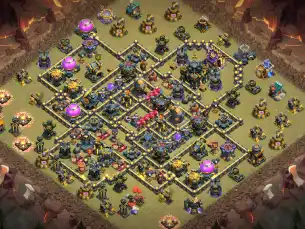
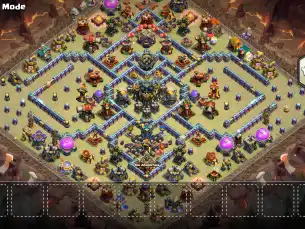
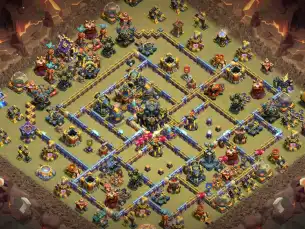
This TH17 War Base uses a tight diamond-style shape with several small compartments branching out from the center. The Town Hall sits high in the core rather than on an outer edge, and it is backed by heavy defensive coverage from surrounding high-damage structures. That placement forces attackers to commit deep if they want reliable Town Hall access instead of taking it cheaply with a short side entry.
The core is busy and compact, with major defenses packed closely enough to keep pressure high while still being separated by walls and compartment breaks. The Monolith, Inferno coverage, and other key defenses are not all stacked into one obvious spell value pocket, which matters against smash attacks and hero-supported entries. The layout also spreads several high-value defenses across the upper, central, and lower sections, so one clean push does not naturally remove everything important at once.
Pathing looks intentionally awkward. Outer buildings are staggered around the diamond edges, and the internal wall lines create diagonal movement instead of simple straight lanes. That can make funneling less reliable for ground armies, especially if an attacker tries to send Root Riders or a hero dive through one side and expects the rest of the army to hold a clean line through the middle. Air armies also have to respect the layered structure, because the attack does not get a flat sweep across the base from one corner to the opposite corner.
The overall idea appears to be delaying the Town Hall takedown, breaking up momentum in the core, and making a clean three-star route harder to script in advance.
Strengths
This design has several practical traits that fit Anti 3 Star war use. It does not rely on one gimmick; instead, it combines central value protection with awkward compartment flow.
- Protected Town Hall: The Town Hall is tucked into the upper-central core, so attackers usually need real commitment to secure it.
- Split defensive value: Key defenses are distributed across multiple compartments, which can limit the value of one entry hero push or one spell-heavy smash.
- Diagonal pathing: The diamond shape encourages troops to drift across angled compartments rather than walk neatly in a straight line.
- Core pressure: Once troops enter the middle, they face concentrated damage from several directions at once.
- Awkward cleanup lines: Exterior buildings are spread enough to make precise funneling more demanding than on a boxy ring style.
Ground Attack Pathing
Ground armies should have a harder time getting a smooth lane than they would against a simple rectangle. The inner walls create short turns, and the compartments are arranged to pull troops off direct lines. That is especially useful against armies that depend on keeping all damage dealers stacked together through the core.
Root Rider style attacks can still break structure, but they may split if the funnel is not exact. A bad entry angle can send part of the army into side compartments while the rest drifts late toward the Town Hall. That split timing is where the core defenses become much more dangerous.
Air Attack Considerations
This layout does a decent job of avoiding one long, easy air sweep. The important defenses are layered from the upper core down through the center and lower side sections, so air troops should stay under pressure for most of the attack. The structure also reduces simple chain flow compared with a base that lines up storages and defenses in straight rows.
That said, air attacks with strong hero support can still work if they remove one flank early and force a clean line toward the Town Hall. The best air plans here will likely be the ones that create precise pathing first rather than relying on raw spam.
Core Value Protection
The center is the main selling point of this layout. Important defenses are packed into a small area, but not in a way that gives away one obvious reward point for spells. An attacker reaching the middle still has to survive layered damage while breaking through compartment edges and keeping support troops together.
For war use, that is valuable because it pressures both halves of a hit: the entry must be clean enough to reach the core, and the back end must still have enough strength left to finish. If you want a TH17 war layout that tries to make the final phase messy rather than straightforward, this one fits that role well, and the copy option makes it easy to test with your own trap setup.
Best Use in War
This layout makes the most sense in regular war or CWL when you want a balanced Anti 3 Star design instead of a heavily baited one-direction trap base. It offers central Town Hall protection, decent spread on major defenses, and pathing that asks attackers to be accurate from the