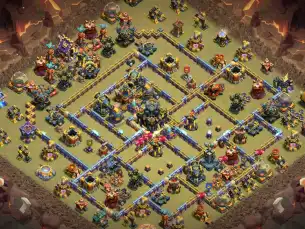
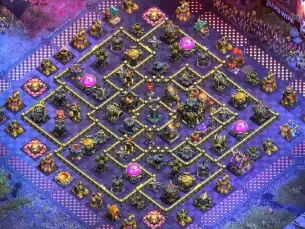
TH17 Anti 3 Star Base with Split Core Defense

Latest Reviews
Strategy Explanation
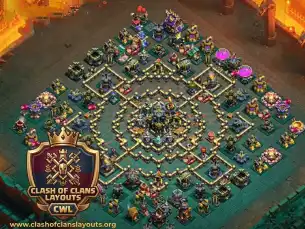
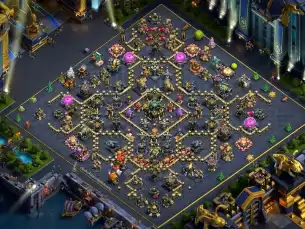
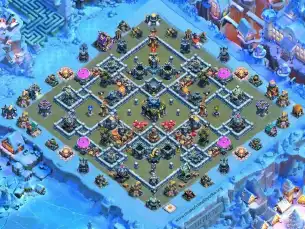
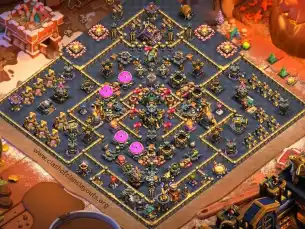
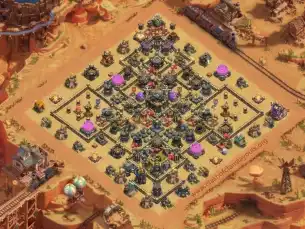
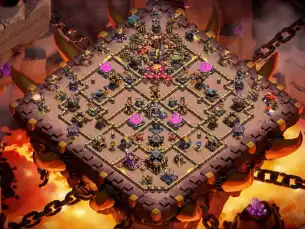
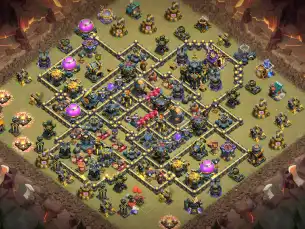
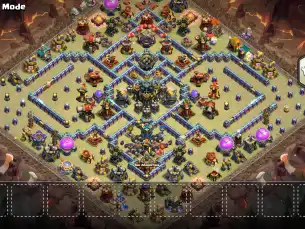
This TH17 base is built around a stretched, compartment-heavy core that makes full clears awkward. The Town Hall sits left of center instead of deep in the middle, which is important: it invites commitment early, but taking it does not automatically open the rest of the key defenses. The central area is packed with high-value defensive coverage, while the right side holds more structure depth, forcing attackers to keep momentum after the first objective.
The layout uses diagonal lanes and offset compartments rather than a simple ring. That creates uneven pathing for ground troops and makes it harder to send one clean push through the whole base. From the image, the major defenses are not stacked tightly together, so attackers are less likely to get huge value from one spell set or one hero entry. This is very much an anti 3 star idea: let the attacker get into the base, but make the transition from Town Hall takedown to full cleanup messy.
Another noticeable feature is the way outer buildings are spread around the edges, especially on the right and lower sides. That can pull funnel troops wide and increase the chance of a main push drifting off the ideal line. If this structure fits your current setup, the copy-layout option makes it easy to test it directly in Clash of Clans.
Strengths
The biggest strength here is how the base separates objectives. The Town Hall, core defenses, and side compartments do not fall in one simple sweep, which is exactly what you want from a TH17 anti 3 star base.
- Offset Town Hall: attackers can reach it, but often need to spend real value to do so.
- Split core pressure: central defenses cover multiple approaches without giving one obvious route through the base.
- Wide compartmenting: smash attacks and Root Rider style entries are less likely to roll cleanly across the map.
- Good defensive spread: key defenses appear separated enough to reduce freeze and rage value.
- Messy outer ring: support troops and heroes can be pulled off line if funneling is not precise.
Town Hall Side Pressure
The left-side Town Hall placement changes how attackers think about the opener. A lot of players will be tempted to take it early to secure the two-star line, especially in war. That usually means sending heroes, a charge, or a siege into a section that does not automatically lead into the heart of the base. In practice, this can leave the main force entering from a less natural angle afterward.
That split between Town Hall access and core access is one of the more useful features of the layout. Even when the first stage of the attack works, the second stage still has to fight through compartment edges and cross-coverage.
Ground Attack Pathing
Ground armies should have trouble staying tight here. The base shape does not offer one obvious straight lane, and the interior walls are arranged to force repeated breaks rather than one smooth push. Root Riders, smash armies, and hero-led entries can still get value, but only if the funnel is very clean.
What helps the defense is the staggered compartment depth. Troops that jump or break into one section are not guaranteed to step directly into the next high-value target. That often leads to troops splitting, circling, or targeting side structures while core defenses keep firing.
Air Attack Considerations
Against air, the layout does a decent job of limiting easy chain value. Buildings are not lined up in a way that obviously invites long Electro Dragon chains through the center. The defensive spread also means air armies may need to spend spells across multiple layers instead of freezing everything important at once.
That said, the broad footprint means an attacker who creates a strong funnel on one flank could still guide balloons or dragons through a meaningful slice of the base. Air players will likely look for an entry that avoids drifting around the outside, so edge control matters a lot here.
Hero and Funnel Control
One of the more practical defensive traits in this layout is how many outer structures can interfere with hero pathing. A King or Queen started too early on the edge may walk for extra buildings instead of stepping into the intended compartment. That can ruin timing for siege support and force extra troop investment just to keep the attack on track.
Because of that, this base is likely to punish rushed entries more than carefully measured ones. It is not a layout that wins by hiding everything in one box. It wins by forcing the attacker to solve several smaller pathing problems in sequence, and that is exactly what makes clean triples harder.