

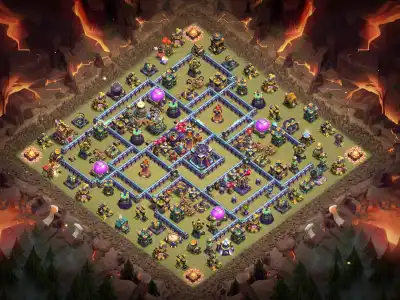
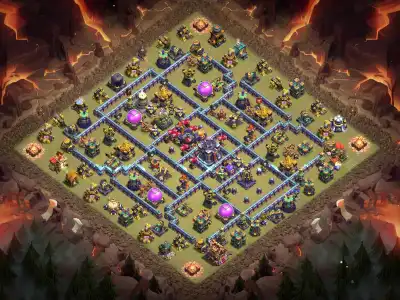
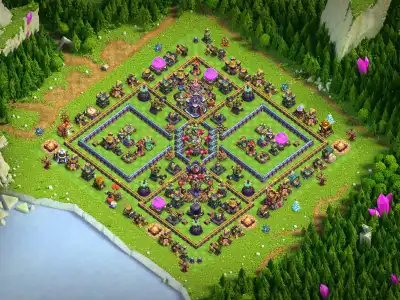
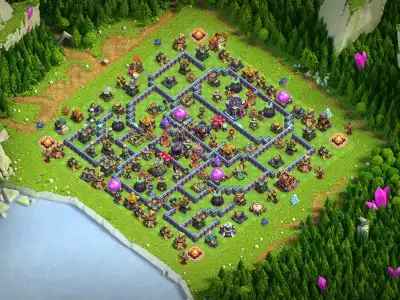
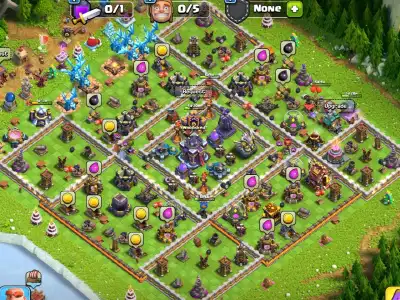
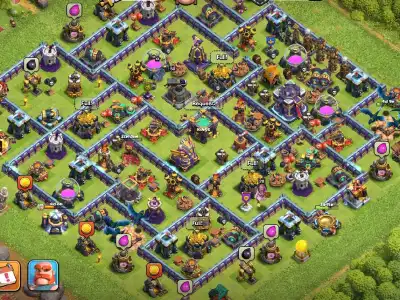
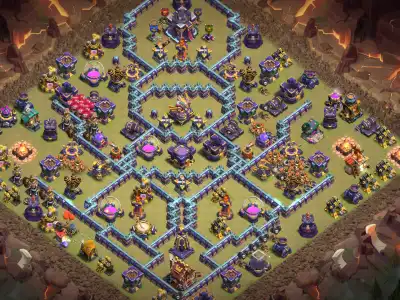
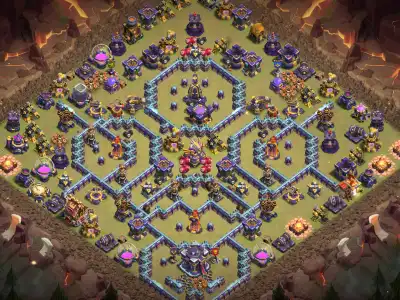
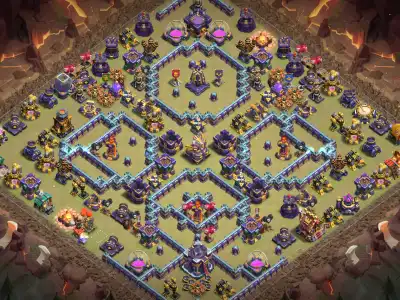
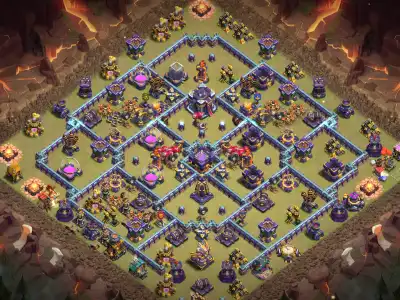
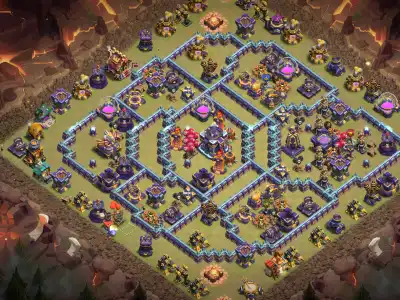
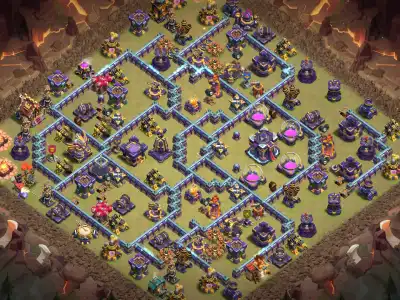
COC Bases: Best TH15 Anti 3 Star Layouts (Copy Links)
Stop full clears with strong TH15 anti-3-star layouts built to break funnels, deny blimp value, and punish meta attacks. Copy any base instantly with 1-tap links.
How to Choose the Best TH15 Anti-3-Star Base
A TH15 anti-3-star base is designed to make the complete
village clear more difficult against prepared attackers. It may allow the
Town Hall or a two-star result if enough defensive strength survives to stop
the final section from being cleared.
The best TH15 anti-3-star layout for your village should
separate the Town Hall, Monolith, Spell Towers, Eagle Artillery, Scattershots,
Inferno Towers, defending Heroes, traps and back-end damage across different
objectives. One Battle Blimp, Queen Charge, Hero dive or central push should
not remove the entire defensive plan.
Use the layouts on this page as starting designs for Clan Wars, Clan War
Leagues, Friendly Challenges or other defenses where preventing the full clear
is the main goal. Compare Town Hall access, Monolith placement, Spell Tower
settings, Battle Blimp paths, Air Sweeper directions, Clan Castle activation,
trap distribution and back-end strength before choosing a base.
Separate Major Objectives
The Town Hall, Monolith, Spell Towers, Eagle Artillery, Scattershots and Inferno Towers should not all be reachable from one planned entry.
Objective separation forces attackers to divide Heroes, spells, equipment value and Siege support between different sections of the village.
Preserve Back-End Damage
A useful anti-3-star layout keeps meaningful defenses active after the Town Hall or opening section falls.
The final section should still contain air-targeting, splash, single-target, trap or defensive Hero pressure that surviving troops must handle with limited support.
Break Clean Attack Flow
Offset compartments, defended funnel buildings and varied target placement can make it harder for a planned attack to move smoothly from the entry into the core and back end.
The goal is controlled pathing, not random wall placement. Troops should be pulled into choices that cost time, spells or Hero ability value.
Use Purposeful Trap Routes
Traps should follow likely Hero, troop and Siege Machine movement. A trap group is more useful when the layout gives attackers a realistic reason to cross it.
Avoid placing every trap near the Town Hall. Anti-3-star bases need uncertainty in the opening, middle and final sections.
What Is an Anti-3-Star Base at Town Hall 15?
Anti-3-star design focuses on preventing the complete clear. This is different from trying to protect every building equally. A base may intentionally give attackers a difficult choice: take the Town Hall early and face a stronger back end, or delay the Town Hall and risk time or pathing problems later.
At TH15, this trade-off is shaped by the Town Hall Giga Inferno, Town Hall poison, Monolith pressure, Spell Tower settings, Eagle Artillery coverage, Scattershot placement, Battle Blimp value, Queen Charge paths and air-ground balance. A good layout should not allow one opening plan to remove all of those problems together.
No TH15 layout can guarantee that every three-star attempt will fail. Attacker skill, army choice, Hero equipment, Siege Machine selection, Clan Castle troops, spell timing and execution all affect the result.
Calculated Two-Star Trade-Off
Some anti-3-star bases may allow the Town Hall and enough percentage for two stars if that route leaves the attacker without enough army strength for the final compartments.
Different from Anti-2-Star
Anti-2-star bases focus on denying the Town Hall-plus-50-percent combination. Anti-3-star bases focus more on objective separation, back-end survival and preventing the full clear.
TH15 Mechanics That Shape Anti-3-Star Layouts
Town Hall 15 introduced the Monolith and Spell Towers, while the TH15 Town Hall uses a Giga Inferno and poison pressure around the Town Hall section. These mechanics make value separation especially important.
Town Hall Giga Inferno and Poison
The TH15 Town Hall can apply heavy pressure around the Town Hall section, and its poison effect can affect troop movement and timing after destruction.
Do not place every important defense beside the Town Hall. A successful Town Hall takedown should not solve the complete base.
Monolith Placement
The Monolith is a major TH15 defense because it threatens Heroes and high-hitpoint troops.
Use it to support an important route, but avoid placing it where one Blimp, Queen Charge or Hero entry removes the Town Hall, Monolith and both Spell Towers together.
Spell Tower Settings
Spell Towers can influence a Blimp landing, Hero entry, main push or final compartment. Their value depends on both placement and selected mode.
After copying a base, review Spell Tower settings and make sure they support the route being defended.
Eagle, Scattershots and Infernos
Eagle Artillery, Scattershots and Inferno Towers should create pressure in different attack phases.
If all major damage sits together, one entry may remove too much of the base before the final phase begins.
Planning the TH15 Town Hall Position
Town Hall placement affects star value, Battle Blimp routes, poison timing, Hero pathing and the amount of defensive value attackers can remove with one commitment. Central, offset and teaser-style positions can all work when the rest of the base supports the intended anti-3-star trade-off.
Central Town Hall
A central Town Hall can require attackers to pass through several defensive layers and use important spells, Hero abilities or Siege support before reaching it.
Avoid building one overloaded core where a single Blimp or main push removes the Town Hall, Monolith, both Spell Towers, Eagle Artillery and most splash damage together.
Offset Town Hall
An offset Town Hall can pull the attack toward one side while strong defenses remain elsewhere.
This can force attackers to choose between securing the Town Hall and preserving enough army strength for the back end.
Teaser-Style Town Hall
A teaser Town Hall encourages attackers to enter from a predictable side. That route should contain traps, defending Heroes, Clan Castle pressure and overlapping damage.
Without a clear punishment plan, the Town Hall may simply become an inexpensive first objective.
Town Hall and Back-End Separation
Reaching the Town Hall should not remove the complete defensive plan. Preserve meaningful air-targeting, splash, single-target and trap pressure in another section.
Planning against Battle Blimp Entries
Battle Blimps can remove too much value when the Town Hall, Monolith, Spell Towers and core defenses sit in one compact area. Anti-3-star layouts should make Blimp value limited even when the delivery succeeds.
Separate Landing-Zone Value
One successful Blimp should not remove the Town Hall and several major defenses while also opening a simple path for the main army.
Cover Direct and Diagonal Routes
Review approaches from every deployment side. The shortest Blimp path is not always the safest or most valuable path for a prepared attacker.
Use Layered Air Pressure
Seeking Air Mines, Air Bombs, Air Sweepers, the Tornado Trap and defensive towers should influence more than one realistic delivery route.
Account for Protected Deliveries
Attackers may support a Blimp with spells, Hero abilities or equipment. Do not assume one air trap or Sweeper will stop every planned delivery.
Planning against Queen Charge and Hero Entries
Queen Charges and Hero dives can remove the Town Hall, Monolith, Spell Towers, Air Defenses or key funnel buildings before the main army begins. A TH15 anti-3-star base should make these entries expensive and limit the follow-up route they create.
Limit Early Hero Value
One Queen Charge or Hero dive should not remove the Town Hall, Monolith, both Spell Towers and an easy path into the next compartment.
Use defending Heroes, Clan Castle range, traps and overlapping defenses to make high-value entries require real support.
Protect the Follow-Up Section
Even when a Hero entry succeeds, the remaining army should still face a difficult transition into the middle or back end.
Avoid one entry that clears the funnel and also gives direct access to the next major objective.
Planning against Smash and Ground Attacks
TH15 ground attacks may use Electro Titans, Super Bowlers, Yetis, Bowlers, Miners, Hog Riders, Heroes or Siege Machines to build a route through the village. Anti-3-star layouts should avoid one direct defensive line through every important objective.
Break Straight Defensive Lines
Do not place the Town Hall, Monolith, Spell Towers, Scattershots, Eagle Artillery, Inferno Towers and final defenses along one obvious ground route.
A planned ground attack should need to redirect, split or spend additional support to reach the next major objective.
Use Offset Compartments
Offset compartments can separate the main army from support troops or make the push travel away from the strongest back-end defenses.
Avoid random wall gaps that create easier access without a defensive reason.
Preserve Single-Target Pressure
The Monolith, single-target Inferno Towers and defending Heroes should challenge high-hitpoint troops and Heroes at different stages of the attack.
Review Miner and Hog Paths
Miners and Hog Riders move between defensive targets. Place Giant Bombs, Spring Traps and Skeleton Traps according to likely target order rather than random wall gaps.
Planning against TH15 Air Attacks
Anti-3-star bases should also preserve air pressure. Electro Dragons, Dragons, Balloons, Lava Hounds, flying Heroes and air-supported Siege Machines can all punish layouts that lose the entire anti-air network early.
Use Controlled Chain Spacing
Separate important buildings enough to reduce repeated Electro Dragon chain value. Avoid excessive spacing that leaves isolated defenses and simple cleanup.
Protect Air Defenses and Sweepers
One Hero entry should not remove an Air Defense, Air Sweeper, Inferno Tower and another major objective together.
Preserve Back-End Air Damage
Air Defenses, Inferno Towers, X-Bows, traps and defending Heroes should remain active after the first air section falls.
Review Balloon Target Order
Balloons move between defensive targets. Place Air Bombs and supporting splash damage where Balloons are likely to gather or change direction.
Defensive Clan Castle Planning
Defensive Clan Castle troops can interrupt Hero entries, slow the main army and force extra spell usage. Their value depends on activation range, troop composition and surrounding defensive coverage.
Avoid an Easy Lure
Check whether one inexpensive troop or Hero can activate all reinforcements and pull them into a safe area before the main army is committed.
Support the Reinforcements
Clan Castle troops should fight while nearby defenses remain active. Reinforcements fighting alone outside the village are easier to isolate and remove.
Recommended Trap Principles for TH15 Anti-3-Star Bases
Trap placement should follow realistic troop, Hero and Siege Machine routes. These ideas are starting principles rather than guaranteed combinations.
- Tornado Trap near active defenses: use its delay where nearby towers can continue attacking a Blimp, Hero group or main army.
- Seeking Air Mines on probable Blimp paths: cover direct and diagonal routes toward the Town Hall, Monolith or core.
- Air Bombs on grouped flight paths: place them where Balloons or other flying troops are likely to gather.
- Giant Bombs on ground routes: position them where Miners, Hog Riders or support troops are likely to move between defenses.
- Spring Traps on important crossings: current Spring Traps target one qualifying troop, so place them where that disruption can affect timing or movement.
- Skeleton Trap modes: choose ground or air according to the Hero, troop or Siege route being defended.
- Preserve back-end traps: avoid committing every trap to the Town Hall or opening section.
How to Compare TH15 Anti-3-Star Layouts
Do not choose a layout only because it looks complex, asymmetrical or widely spaced. Compare whether it preserves meaningful defensive value after the opening and Town Hall sections are attacked.
- Inspect Town Hall access: identify the commitment needed to secure it and the route available afterward.
- Review Monolith placement: check whether one entry removes it with the Town Hall and Spell Towers.
- Check Spell Tower settings: both placement and mode should support the intended defensive route.
- Inspect Battle Blimp paths: review direct and diagonal approaches toward the Town Hall and core.
- Review Queen Charge routes: avoid one charge path that removes too many major objectives early.
- Review ground paths: avoid one straight defensive route through the complete village.
- Check Air Sweeper directions: make sure they influence realistic air and Blimp approaches.
- Inspect Clan Castle activation: avoid an inexpensive lure before the main army is committed.
- Review outside percentage: safe perimeter buildings can create easy funnels and cleanup.
- Check the back end: meaningful defensive damage should remain after the opening and Town Hall sections fall.
How to Use TH15 Anti-3-Star Copy Links
Select a TH15 anti-3-star base copy link to open the design in the Clash of Clans Layout Editor. Confirm that every available building, defense, wall and trap has been placed before saving the layout.
After copying, review Town Hall placement, Monolith placement, Spell Tower settings, Air Sweeper directions, Inferno Tower modes, X-Bow modes, Skeleton Trap modes, Clan Castle troops, trap positions and the selected defensive slot.
Check whether newly upgraded or previously unplaced buildings remain outside the saved design. Missing buildings can change spacing, troop pathing, Blimp value and back-end coverage.
A working one-tap copy link makes installation easier, but it does not prove that the layout has undergone controlled testing or guarantee that every three-star attempt will fail.
Testing a TH15 Anti-3-Star Base
Friendly Challenges can reveal obvious Town Hall, Clan Castle, Battle Blimp, Queen Charge, air-entry and ground-path weaknesses before the layout is used in an important war, league or defensive slot.
- Test the obvious entry: determine whether the most attractive side gives too much value.
- Test a Battle Blimp route: check whether one delivery can remove several major objectives.
- Test Queen Charge and Hero paths: review whether one entry removes the Town Hall, Monolith, Spell Towers or core defenses too cheaply.
- Test Smash and ground paths: review whether one ground route connects the opening, Town Hall and back end too cleanly.
- Test air plans: check whether Electro Dragons, Dragons or Balloons receive too much value from one side.
- Test Clan Castle activation: determine whether defensive troops can be lured and removed safely.
- Change one feature at a time: targeted adjustments make it easier to understand which change affected the result.
Common TH15 Anti-3-Star Base Mistakes
- Trying to protect every objective equally: anti-3-star design depends on calculated trade-offs and surviving defensive sections.
- Creating an overloaded core: one Battle Blimp, Queen Charge, Hero entry or central push may remove several major defenses together.
- Stacking Town Hall, Monolith and Spell Towers: one route may remove too much of the TH15 defensive structure.
- Ignoring Spell Tower settings: the selected mode may not support the route being defended.
- Ignoring Queen Charge value: one charge may remove several major objectives and set up an easy follow-up.
- Leaving an easy Clan Castle lure: reinforcements may be removed before the main attack begins.
- Ignoring Air Sweeper directions: the main air or Blimp route may remain unpressured.
- Depending on one trap group: prepared attackers may test, bypass or protect troops through that area.
- Using outdated Spring Trap assumptions: Spring Traps now target one qualifying troop rather than launching an entire group.
- Leaving one direct ground route: a planned push may connect the Town Hall, core and back end without changing direction.
- Leaving a weak final section: surviving troops may finish the village after the strongest defenses are removed early.
- Replacing the layout after one attack: one three-star result does not necessarily reveal a repeated structural weakness.
When Should You Adjust a TH15 Anti-3-Star Layout?
Review Friendly Challenges and defensive replays for repeated routes. Look for the same Battle Blimp path, Queen Charge route, Hero entry, Clan Castle lure, Smash route, Electro Dragon chain, Sweeper bypass, air path or weak final section.
Begin with one targeted change. Adjust an Air Sweeper direction, revise a wall opening, move an exposed defense, separate two high-value buildings, change a Spell Tower setting or redistribute one trap group.
Review additional attacks after the change. Confirm that the adjustment reduces the original weakness without creating a simpler route for another strategy.
Should You Rotate TH15 Anti-3-Star Bases?
Rotation may help when the same opponent has already studied the layout, when repeated attacks use the same prepared entry or when the attack styles you face change over time.
Do not replace a layout only because it conceded one triple. A focused change may be more useful when the base continues to create difficult finishes against other attacks.
How These TH15 Anti-3-Star Layouts Are Reviewed
Layouts may be community-submitted or editorially reviewed for their Town Hall level, visible structure, category relevance, image quality and copy-link availability. Editorial review may include Town Hall access, Monolith placement, Spell Tower settings, Clan Castle activation, Battle Blimp routes, Queen Charge paths, objective separation and back-end strength.
Publication does not automatically mean that a layout has undergone controlled testing against every TH15 strategy or experienced war attacker. Any layout specifically described as tested should be supported by documented defensive records and a clear testing process.
Read the layout review methodology for information about submissions, editorial checks, corrections and testing labels.
Return to the complete TH15 base layout guide to compare anti-3-star designs with war, anti-2-star, Legend League, defense, farming, hybrid and anti-air categories.
Browse this page to compare TH15 anti-3-star bases, Town Hall 15 anti-three-star layouts and available one-tap copy links. The best design for your village is the layout that separates major objectives, preserves back-end damage and addresses repeated attack routes shown in your defensive replays. No TH15 base can guarantee that every three-star attempt will fail.