TH19 War Base with Offset Town Hall and Split Core

Latest Reviews 0
Strategy Explanation
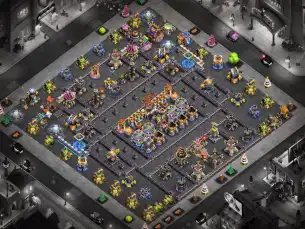
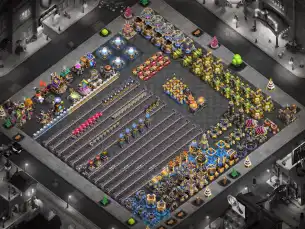
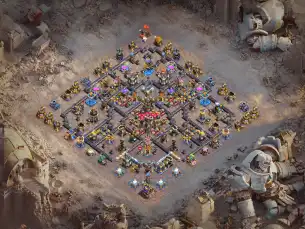
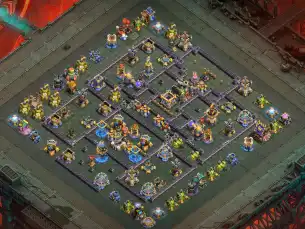
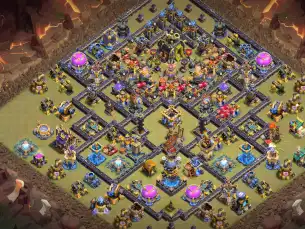
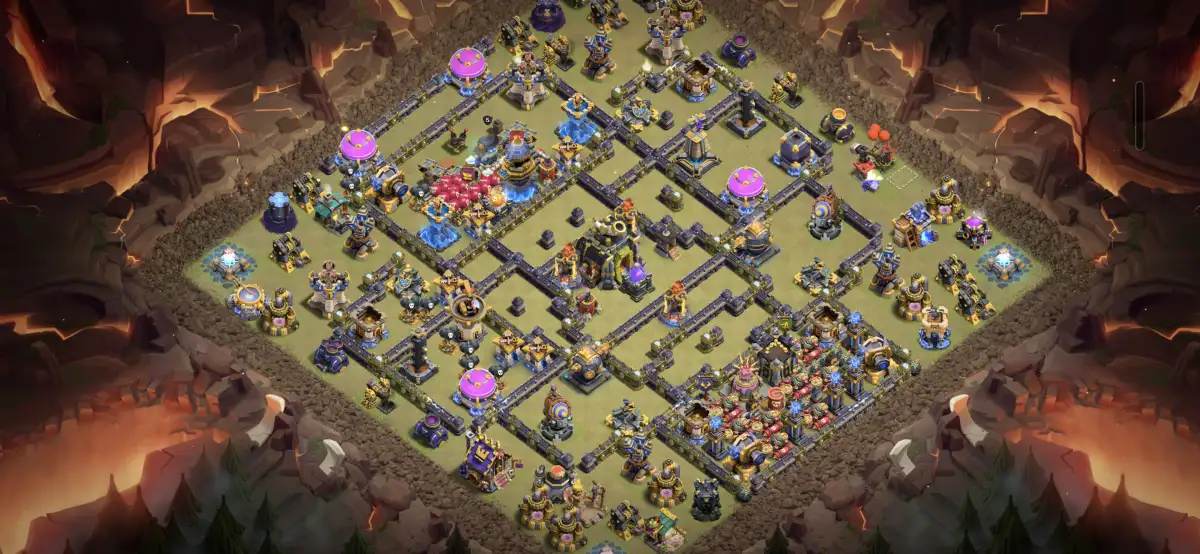
This TH19 war layout uses a spread compartment style with the Town Hall placed slightly off center rather than buried in the exact middle. That choice matters because it forces attackers to decide early whether to commit into the Town Hall side or take percentage and key defenses from the opposite half first. The core is not open and direct. Instead, it is broken into several small channels and linking compartments, which can slow down ground armies and make line-based pushes lose shape before they reach the most important targets.
One of the first visible ideas here is value separation. The Town Hall, core damage, and major defenses are not stacked tightly in one rectangle. Several high-value targets sit in neighboring but distinct compartments, which reduces the chance of one jump, one log path, or one straight push collecting everything at once. Air defenses and point defenses are also spread around the base rather than clustered beside the Town Hall, so air armies have to stay under pressure after the first layer falls.
The outer ring has enough buildings and side compartments to influence pathing. A careless funnel can leave troops walking around the base instead of stepping cleanly into the center. That is especially relevant against broad spam styles and hero-supported ground entries. From the image, the design appears built to make attackers spend time and support troops creating shape before they can commit the main army.
Strengths
This layout has several practical war strengths that come directly from the visible structure.
- Offset Town Hall pressure: The Town Hall is protected, but not placed in a predictable dead-center box. That can create awkward decisions for charges and smash attacks.
- Segmented core: The middle compartments are broken up enough to deny easy access to multiple premium targets in one sweep.
- Wide defensive spread: Defenses are distributed across the whole base, which helps maintain damage on troops even after one side is cleared.
- Funneling tax: The outside layer has enough depth to punish sloppy setup. If one edge survives, main troops can drift sideways.
- Reduced chain efficiency: Buildings are not packed into one tight block across most of the layout, so Electro Dragon chains do not get obvious full-base value for free.
Ground Attack Pathing
Ground armies will usually want to enter from a side that lets them claim two compartments quickly and turn inward before circling. The challenge is that the middle does not offer one obvious straight road from edge to Town Hall to back-end defenses. Root Rider and smash style attacks can still work here, but they need clean funneling on both sides. If one wing is left standing, troops may split at the compartment intersections instead of driving through the core.
That makes hero support important. The layout rewards attackers who create shape first and punishes those who drop everything in one line. In war, that extra setup cost is often enough to force an early spell commitment.
Air Attack Considerations
Air armies have to account for the distributed defenses and the offset Town Hall. There is no single obvious corner where taking one section collapses the whole anti-air network. A blimp or direct Town Hall push may secure the objective, but the follow-up flight path still has to cross separate compartments with continued point defense coverage.
Electro Dragons are not automatically shut down, but this is not an easy chain layout either. Building gaps and compartment breaks should lower chain efficiency compared with more compact war designs. Dragons and similar air troops will likely need strong hero funneling to avoid drifting around the outer ring.
Queen Charge Entry Ideas
A Queen Charge here looks more useful as a shaping tool than a full answer by itself. The reachable outer defenses and edge structures can give the Queen early value, but the segmented interior limits how much she can naturally walk into the base without wall support or a siege commitment. That is a good sign for war defense because it forces the attacker to choose between preserving spells for the main push or spending extra support to extend the charge.
If you want to test this design yourself, use the copy option and check which side feels hardest to funnel cleanly. That is usually where this layout gets its best defensive value.
Why It Fits War Use
This design makes sense for war because it asks for precise planning instead of giving away obvious entry lines. The Town Hall placement, split core, and broad defensive spread all work toward the same goal: deny clean, efficient value. It may still be broken by a well-prepared hit, but it should make rushed attacks and one-direction spam far less comfortable.