TH19 War Base with Offset Town Hall and Split Core

Latest Reviews 0
Strategy Explanation
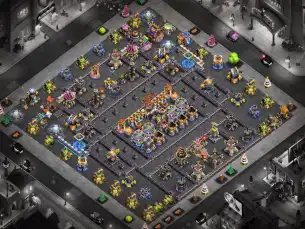
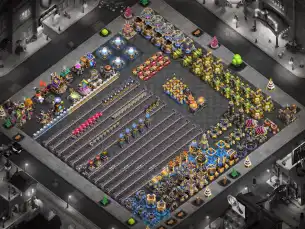
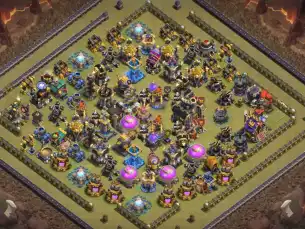
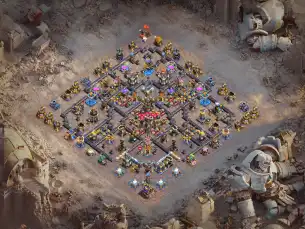
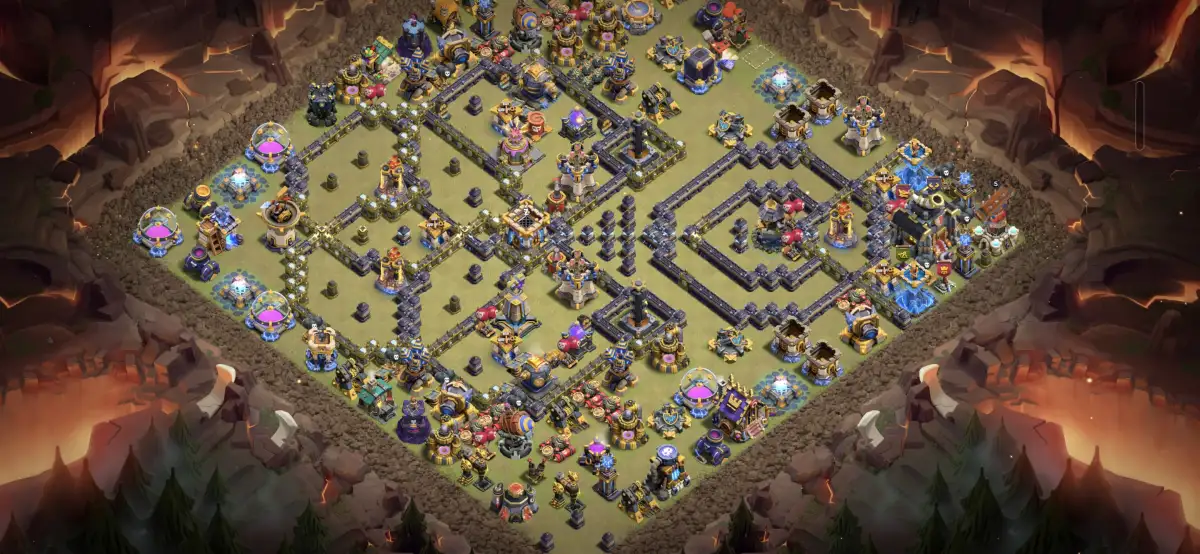
This TH19 war layout is built around separation rather than a single tight core. The Town Hall sits on the right side in its own defended section instead of being centered, while the middle of the base is broken into several narrow compartments and open pockets that can pull troops off clean lines. That offset Town Hall creates an immediate choice for attackers: commit heavily to the right to secure the two-star early, or take a more balanced entry and risk reaching the Town Hall late.
The central area is dense with high-value defenses and walls that do not open in a straight line. The middle-left and center compartments are wide enough to stall direct ground movement, and the ringed structure on the right adds another layer before troops can transition smoothly into the Town Hall side. This kind of spacing makes it harder for a simple push to hold formation all the way through the base.
Outer buildings are also spread around the edges instead of giving easy funnel anchors on every side. That matters in war because failed funneling here can send tanks or heroes into side compartments while the main army drifts around the core. The design looks meant to punish attacks that rely on one clean lane through the middle, especially smash-style entries that want immediate access to multiple headline defenses at once.
Strengths
The best feature here is the way the Town Hall is protected without putting every major defense into one obvious central target. Attackers can identify the Town Hall side, but taking it does not automatically collapse the rest of the base. The split structure forces extra planning for pathing and spell timing.
- Offset Town Hall: The right-side placement helps pressure safe two-star attacks, since reaching it can cost more troops than a centered but exposed Town Hall would.
- Layered compartments: The inner walls create awkward transitions for ground armies, especially if the initial funnel is even slightly off.
- Good defensive spread: Key defenses are not stacked tightly together, which can reduce the value of a single spell or one direct push through the middle.
- Open interior pockets: Empty spaces and staggered walls can disrupt targeting and create inefficient movement for troops that prefer compact pathing.
Town Hall Side Pressure
The right flank is the defining side of this design. The Town Hall is not sitting naked on the edge, but it is still close enough to a side entry that attackers will naturally test this area first. That makes defensive support around this flank very important. If the first layer falls too cleanly, the Town Hall can be claimed while the attacker preserves enough force to play for percentage elsewhere.
On the other hand, the layout does a good job of making that commitment costly. Troops entering from the Town Hall side still need to work through layers and cannot assume they will roll straight into the middle afterward.
Ground Attack Pathing
Ground armies should have a harder time holding a clean line through the center. The base is not one simple box, and the open spaces between compartments can cause troops to split or walk around walls instead of through them. That is especially useful against plans that depend on a compact push through the core with heroes and support all stacked together.
For Root Rider or smash-style attacks, the challenge is less about getting in and more about keeping the army moving where it needs to go after the first break. If you use the copy link for war testing, this is the part worth watching most closely in friendly challenges.
Air Attack Considerations
This layout gives air attackers mixed signals. The broader spacing reduces easy chain value compared with tightly packed diamond-style designs, which is helpful against Electro Dragons. At the same time, the offset Town Hall can invite a directed air push from the right if the attacker can remove a few key defenses and hold the flight path together.
Blimp and hero support decisions become important here because the base does not hand out simple central value. Air armies can get the Town Hall, but turning that into a full triple still depends on preserving enough strength for the split compartments and scattered defenses across the rest of the base.
War Use and Trade-Offs
As a war layout, this design fits the Anti 2 Star and Anti 3 Star tags well because it asks different questions at different stages of the attack. First, it makes the Town Hall take real commitment. Second, it avoids giving away the entire base even if that commitment works. That is a strong war trade-off.
The main risk is that very methodical attackers may accept a low-risk Town Hall take and then build percentage around the outside. So this works best when the goal is to force precise planning rather than rely on surprise alone.