TH19 War Base with Offset Town Hall and Split Core

Latest Reviews 0
Strategy Explanation
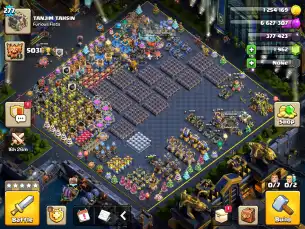
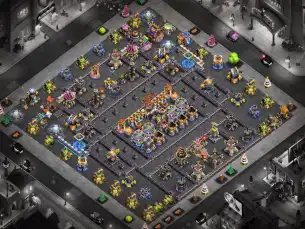
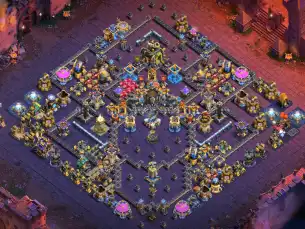
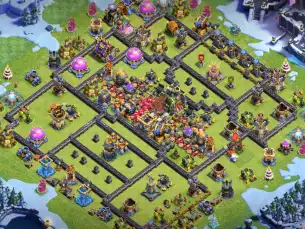
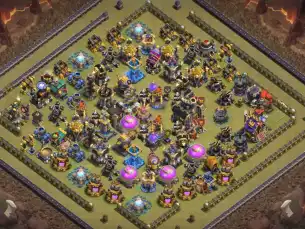
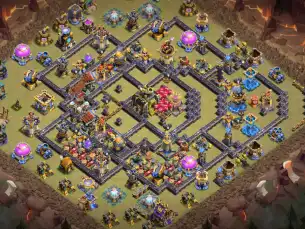
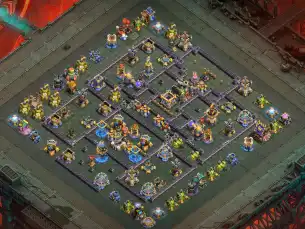
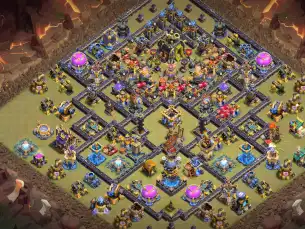
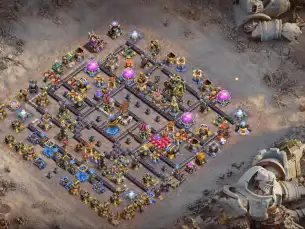
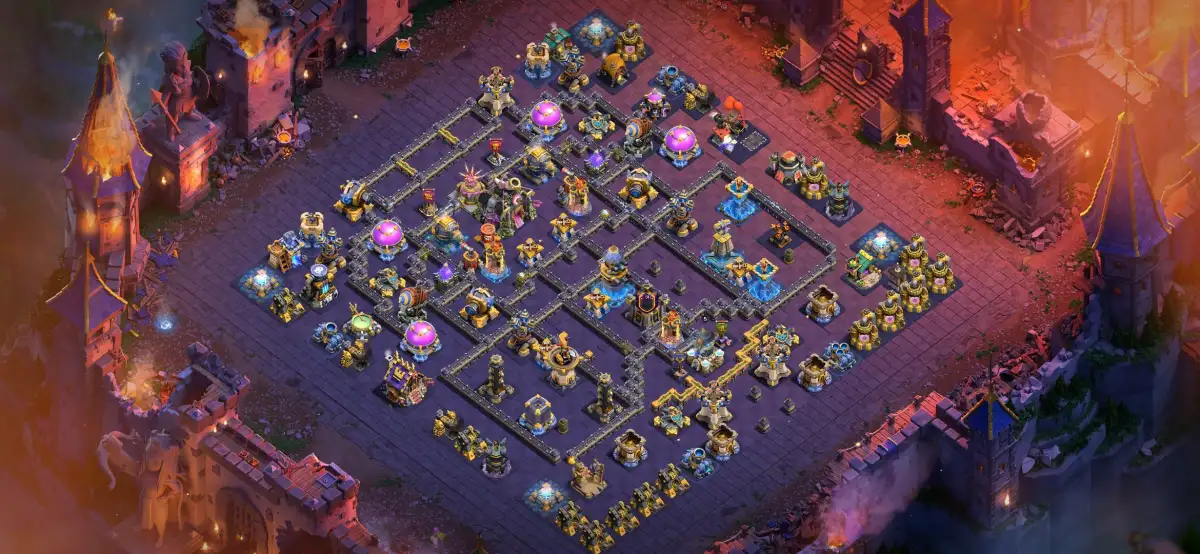
This TH19 war layout uses an offset Town Hall placed toward the upper side rather than sitting dead center. That alone changes how attackers approach it, because taking the Town Hall early does not automatically give smooth access to the rest of the core. The main compartments are split diagonally across the base, with several medium and small sections forcing troops to break multiple walls instead of flowing cleanly in one line.
The central area is busy with high-value defenses spread across separate pockets instead of stacked tightly together. That spacing makes it harder to get huge spell value and also limits simple smash attacks that rely on rolling straight through the middle. The lower half has another set of defensive anchors and compartments that keep pressure on troops even after the first layer is opened, which is important for anti 3 star value. From the image, the layout appears built to make attackers choose between securing the Town Hall side early or committing deeper into the core and risking pathing problems on the back end.
Outer buildings are not arranged in a perfect ring, which can also create funnel mistakes. Several structures sit just outside key compartments, so heroes or support troops can drift if the funnel is not prepared well. Air armies also need to respect the spread of defenses across the upper and right side, because there is no obvious straight line where everything chains together neatly.
Strengths
The biggest strength here is how the base separates its important targets. The Town Hall is protected, but it is not placed in a way that gives easy access to the entire core after it falls. That creates a useful trade-off for defense: an attacker may secure two stars, but still struggle to keep the army together for the finish.
- Offset Town Hall: encourages early commitment to one side and can pull the attack off a clean full-base route.
- Split core compartments: forces repeated wall breaks and makes direct center pushes less reliable.
- Good defensive spread: key defenses are not all clumped together, which lowers freeze and rage value compared with tighter box-style layouts.
- Messy outer pathing: the outside structures can punish weak funneling and cause heroes to walk away from the intended entry.
- Back-end pressure: the lower compartments still hold meaningful defenses, so attacks that burn too much early can stall late.
Town Hall Pressure
Because the Town Hall sits high and off-center, it acts more like a side anchor than a classic core target. That is useful in war, since many attackers prefer to line up a straight push through the middle. Here, taking the Town Hall can pull the army upward and leave lower defenses active for longer. If you use the copy option, this is the main feature worth preserving rather than shifting it into a standard central box.
Ground Attack Pathing
Ground armies will usually want a clean entry from either the upper-left approach or one of the lower lanes, but neither route looks simple. The internal walls create several redirection points, and the core is not shaped to reward a single jump spell covering everything. Root Rider and smash players can still break sections open, but they may lose shape if heroes drift around the outer compartments instead of collapsing inward. That makes support timing important, especially once the push reaches the lower middle defenses.
Air Attack Considerations
This layout is reasonably awkward for air because the defenses are spread over a broad footprint instead of forming one compact chain-friendly block. Electro Dragon value does not look free from the image, especially through the middle where compartments and spacing break up easy lightning-style flow. Lalo-style attacks may find better control than spam air armies, but they still need a strong plan for the Town Hall side so the balloons are not forced through it at a bad angle.
Best Use in War and Legends
This design fits war and Legend League because it gives up very little for free and asks the attacker to make a real routing decision from the start. It does not rely on one gimmick. Instead, it uses offset objectives, compartment layering, and defensive spacing to pressure execution over the full attack. That is usually the kind of layout that holds up best across repeated hits from different army styles.